


ΝΕΑ
Soft Skills: The Skills That May Not Appear on a Report Card but Can Shape a Child’s Future
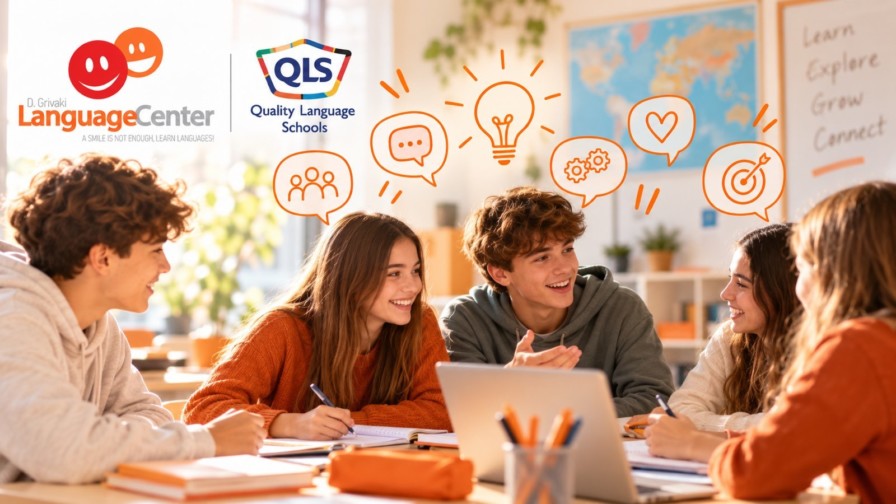
Soft Skills: Οι δεξιότητες που δεν γράφονται πάντα στον βαθμό, αλλά καθορίζουν το μέλλον
Γιατί η σύγχρονη εκπαίδευση δεν μπορεί πλέον να περιορίζεται μόνο στη γνώση
Για πολλά χρόνια, όταν μιλούσαμε για έναν «καλό μαθητή», σκεφτόμασταν κυρίως βαθμούς, γνώσεις, εξετάσεις και πιστοποιήσεις.
Σήμερα, όμως, η εκπαίδευση διεθνώς στρέφει όλο και περισσότερο την προσοχή της και σε ένα δεύτερο, εξίσου σημαντικό σύνολο δεξιοτήτων: τα soft skills.
Είναι οι δεξιότητες που βοηθούν ένα παιδί να επικοινωνεί, να συνεργάζεται, να διαχειρίζεται τα συναισθήματά του, να προσαρμόζεται στις αλλαγές, να αντιμετωπίζει προβλήματα, να εκφράζει με σεβασμό τη γνώμη του, να ακούει τον άλλον και να λειτουργεί υπεύθυνα μέσα σε μια ομάδα και, αργότερα, μέσα στην κοινωνία.
Και ίσως αυτό να είναι ένα από τα σημαντικότερα ερωτήματα που καλείται να απαντήσει σήμερα η εκπαίδευση:
Προετοιμάζουμε τα παιδιά μόνο για την επόμενη εξέταση ή τα προετοιμάζουμε και για τη ζωή;
Τι είναι πραγματικά τα soft skills;
Ο όρος soft skills περιγράφει ένα ευρύ σύνολο κοινωνικών, συναισθηματικών και προσωπικών δεξιοτήτων. Ο OECD χρησιμοποιεί συχνά τον όρο social and emotional skills και περιλαμβάνει, μεταξύ άλλων, την επιμονή, την υπευθυνότητα, τον αυτοέλεγχο, τη διαχείριση του στρες, την αισιοδοξία, την κοινωνικότητα, τη δημιουργικότητα, την περιέργεια, την ενσυναίσθηση και την εμπιστοσύνη.
Στην πράξη, μιλάμε για δεξιότητες όπως:
- επικοινωνία και ενεργητική ακρόαση,
- συνεργασία και ομαδικότητα,
- κριτική και δημιουργική σκέψη,
- επίλυση προβλημάτων και λήψη αποφάσεων,
- προσαρμοστικότητα και ανθεκτικότητα,
- αυτογνωσία και αυτοπεποίθηση,
- ενσυναίσθηση και σεβασμός στη διαφορετικότητα,
- διαχείριση χρόνου, πίεσης και συναισθημάτων,
- υπευθυνότητα, πρωτοβουλία και κοινωνική συνείδηση.
Δεν πρόκειται, λοιπόν, για «δευτερεύουσες» δεξιότητες. Αντίθετα, αποτελούν μέρος της προσωπικής και κοινωνικής ανάπτυξης ενός νέου ανθρώπου.
Γιατί είναι τόσο σημαντικές για τα παιδιά και τους εφήβους;
Τα δεδομένα του OECD δείχνουν ότι ισχυρότερες κοινωνικές και συναισθηματικές δεξιότητες συνδέονται με θετικά αποτελέσματα σε πολλούς τομείς της ζωής των νέων, όπως η σχολική επίδοση, η ικανοποίηση από τη ζωή, υγιέστερες συμπεριφορές, χαμηλότερο άγχος στο σχολείο και πιο φιλόδοξα σχέδια για το μέλλον.
Παράλληλα, η UNICEF εντάσσει στις δεξιότητες ζωής την κριτική σκέψη, την επίλυση προβλημάτων, την αποτελεσματική επικοινωνία, τη δημιουργία υγιών σχέσεων, την ενσυναίσθηση και την ανάπτυξη αυτοεκτίμησης. Ιδιαίτερη σημασία δίνει μάλιστα στη βιωματική εκπαίδευση: τα παιδιά δεν μαθαίνουν απλώς ακούγοντας, αλλά κάνοντας, εξασκώντας και αναστοχαζόμενα πάνω σε πραγματικές καταστάσεις.
Αυτό είναι και το κλειδί: τα soft skills δεν κατακτώνται με αποστήθιση.
Καλλιεργούνται μέσα από εμπειρίες.
Από το σχολείο στο πανεπιστήμιο και από το πανεπιστήμιο στην αγορά εργασίας
Η σημασία τους δεν σταματά με την αποφοίτηση από το σχολείο.
Καθώς η τεχνολογία και η Τεχνητή Νοημοσύνη μεταβάλλουν ταχύτατα το περιβάλλον εργασίας, οι καθαρά τεχνικές γνώσεις δεν αρκούν από μόνες τους. Το Future of Jobs Report 2025 του World Economic Forum επισημαίνει ότι, παράλληλα με τις τεχνολογικές δεξιότητες, ανθρώπινες ικανότητες όπως η αναλυτική σκέψη, η ανθεκτικότητα, η ηγεσία και η συνεργασία παραμένουν κρίσιμες για τον κόσμο της εργασίας.
Αυτό σημαίνει ότι ένα παιδί που σήμερα μαθαίνει να συνεργάζεται, να παρουσιάζει μια ιδέα, να διαχειρίζεται μια διαφωνία, να ακούει, να επιχειρηματολογεί και να αναλαμβάνει ευθύνη δεν αποκτά απλώς «καλούς τρόπους».
Χτίζει δεξιότητες για το μέλλον του.
Μπορούν τα soft skills να διδαχθούν;
Ναι — και αυτό είναι ίσως το πιο σημαντικό μήνυμα προς γονείς και εκπαιδευτικούς.
Τα soft skills δεν αποτελούν απλώς χαρακτηριστικά με τα οποία κάποιος «γεννιέται». Μπορούν να καλλιεργηθούν και να ενισχυθούν μέσα από κατάλληλες εκπαιδευτικές πρακτικές και συστηματικές εμπειρίες. Ο OECD επισημαίνει ότι τα εκπαιδευτικά συστήματα ενσωματώνουν όλο και περισσότερο τις κοινωνικές και συναισθηματικές δεξιότητες στα προγράμματά τους και εξετάζει συγκεκριμένες πρακτικές για τη διδασκαλία και την ανάπτυξή τους.
Για τον λόγο αυτό αποκτούν ιδιαίτερη αξία οι οργανωμένες εκπαιδεύσεις από αναγνωρισμένους και εξειδικευμένους εκπαιδευτικούς φορείς, όπου οι νέοι μπορούν να βγουν από το στενό πλαίσιο της τάξης και να συμμετέχουν σε βιωματικές δραστηριότητες, workshops, ομαδικές εργασίες, role plays, συζητήσεις και projects.
Η εκπαίδευση τότε μετατρέπεται από θεωρία σε εμπειρία.
Όταν η ξένη γλώσσα γίνεται εργαλείο ζωής
Στο D. Grivaki Language Center πιστεύουμε ότι η διδασκαλία μιας ξένης γλώσσας δεν πρέπει να εξαντλείται στην εκμάθηση γραμματικής και λεξιλογίου ή στην απόκτηση ενός ακόμη πιστοποιητικού.
Η γλώσσα είναι πρωτίστως εργαλείο επικοινωνίας, σύνδεσης και συμμετοχής στον κόσμο.
Γι' αυτό θεωρούμε ιδιαίτερα σημαντικό να δίνουμε στους μαθητές μας, όπου αυτό είναι δυνατό, πρόσβαση σε οργανωμένες δράσεις και εκπαιδευτικές εμπειρίες μέσα από τις οποίες χρησιμοποιούν πραγματικά τα Αγγλικά τους, συνεργάζονται με άλλους νέους και παράλληλα καλλιεργούν δεξιότητες που θα χρειαστούν πολύ μετά το τέλος των εξετάσεών τους.
Χαρακτηριστικό παράδειγμα αποτελεί η δυνατότητα συμμετοχής των μαθητών μας στο YOUTH SHOOTS 2026, στο πλαίσιο του QLS Anti-Bullying Campaign.
YOUTH SHOOTS 2026: Εκπαίδευση πέρα από τα όρια της τάξης
Το Youth Shoots είναι ένα αγγλόφωνο, βιωματικό εκπαιδευτικό πρόγραμμα με επίκεντρο το Mental Well-Being, τα soft skills και τα life skills των νέων.
Η φετινή εκπαίδευση πραγματοποιείται από τον Βρετανό εκπαιδευτή Paul Hanmore και, σύμφωνα με την ενημέρωση του προγράμματος, βασίζεται σε πρωτόκολλα του Βρετανικού Υπουργείου Παιδείας σχετικά με το Mental Well-Being.
Για τους μαθητές της Κρήτης η διοργάνωση προγραμματίζεται για Κυριακή 15 Νοεμβρίου 2026 ή, εναλλακτικά, Σάββατο 14 Νοεμβρίου 2026.
Πρόκειται για 7ωρη, βιωματική και εξ ολοκλήρου αγγλόφωνη εκπαίδευση για μαθητές ηλικίας 12–17 ετών, με επίπεδο Αγγλικών από Β1 έως Proficiency.
Μέσα από την εμπειρία αυτή, οι μαθητές καλούνται να δουλέψουν πάνω στη διαχείριση συναισθημάτων και δύσκολων καταστάσεων, στην αυτογνωσία, στην επικοινωνία, στη συνεργασία, στην κοινωνική υπευθυνότητα και σε δεξιότητες που μπορούν να μεταφέρουν στο σχολικό, οικογενειακό και κοινωνικό τους περιβάλλον.
Και υπάρχει μία ακόμη σημαντική διάσταση: όλα αυτά πραγματοποιούνται στα Αγγλικά.
Ο μαθητής παύει για λίγες ώρες να χρησιμοποιεί την ξένη γλώσσα επειδή «έχει μάθημα Αγγλικών» και αρχίζει να τη χρησιμοποιεί επειδή θέλει να επικοινωνήσει, να συνεργαστεί, να εκφράσει άποψη και να συμμετάσχει.
Εκεί ακριβώς η ξένη γλώσσα αποκτά πραγματικό νόημα.
Από την εκπαίδευση στην ενεργό συμμετοχή
Με την ολοκλήρωση του Youth Shoots, οι συμμετέχοντες εντάσσονται επίσης στο QLS National Youth Board – Εθνικό Συμβούλιο Νέων QLS, έχοντας τη δυνατότητα να συμμετέχουν σε οργανωμένες δράσεις Anti-Bullying και σχετικές συναντήσεις υπό την καθοδήγηση εκπαιδευτικών του QLS.
Η συμμετοχή συνοδεύεται από πιστοποιητικό συμμετοχής, ενώ περιλαμβάνονται εκπαιδευτικό υλικό, T-shirt και catering. Το κόστος των 25€ ανά μαθητή καλύπτεται εξ ολοκλήρου από το QLS Anti-Bullying Campaign, επομένως η συμμετοχή προσφέρεται δωρεάν στους μαθητές.
Ένα τέτοιο πιστοποιητικό μπορεί επίσης να εμπλουτίσει το εκπαιδευτικό portfolio ενός νέου, καταγράφοντας τη συμμετοχή του σε μια οργανωμένη εξωσχολική εκπαιδευτική δράση. Σε μελλοντικές αιτήσεις σπουδών ή άλλες εκπαιδευτικές ευκαιρίες, η αξία του αξιολογείται φυσικά πάντοτε από τον εκάστοτε φορέα και στο πλαίσιο του συνολικού προφίλ του υποψηφίου.
Το σχολείο του αύριο δεν μπορεί να διδάσκει μόνο για τις εξετάσεις
Τα παιδιά μας θα ζήσουν, θα σπουδάσουν και θα εργαστούν σε έναν κόσμο πολύ διαφορετικό από αυτόν στον οποίο μεγαλώσαμε εμείς.
Θα χρειαστούν γνώσεις. Θα χρειαστούν γλώσσες. Θα χρειαστούν ψηφιακές δεξιότητες.
Θα χρειαστούν όμως και κάτι βαθύτερο:
να μπορούν να επικοινωνούν, να συνεργάζονται, να προσαρμόζονται, να σκέφτονται κριτικά, να σέβονται τη διαφορετικότητα, να διαχειρίζονται τις δυσκολίες και να στέκονται με αυτοπεποίθηση απέναντι σε έναν κόσμο που αλλάζει.
Αυτή είναι για εμάς η ουσία των soft skills.
Και αυτή είναι η εκπαίδευση που θέλουμε να υπηρετούμε: μια εκπαίδευση που δεν μετρά την επιτυχία ενός παιδιού μόνο από το πόσα γνωρίζει σήμερα, αλλά και από το πόσο έτοιμο είναι να χρησιμοποιήσει όσα γνωρίζει για να χτίσει το αύριό του.
Στο D. Grivaki Language Center, η ξένη γλώσσα είναι ο στόχος — αλλά ταυτόχρονα είναι και το μέσο για κάτι μεγαλύτερο:
να ανοίγουμε στους μαθητές μας πόρτες προς τη γνώση, τον κόσμο και τον ίδιο τους τον εαυτό.
Δέσποινα Γριβάκη
Director of Studies & Owner
D. Grivaki Language Center
Soft Skills: The Skills That May Not Appear on a Report Card but Can Shape a Child’s Future
Why modern education can no longer focus on knowledge alone
For many years, when we spoke about a “good student”, we mainly thought of grades, academic knowledge, examinations and qualifications.
Today, however, education worldwide is placing increasing emphasis on another equally important set of abilities: soft skills.
These are the skills that help young people communicate effectively, collaborate with others, manage their emotions, adapt to change, deal with challenges, express their opinions respectfully, listen to others and act responsibly within a group and, ultimately, within society.
Perhaps one of the most important questions modern education must answer is this:
Are we preparing children only for their next examination, or are we also preparing them for life?
What are soft skills?
The term soft skills describes a broad range of social, emotional and personal abilities.
They include:
- communication and active listening,
- collaboration and teamwork,
- critical and creative thinking,
- problem-solving and decision-making,
- adaptability and resilience,
- self-awareness and self-confidence,
- empathy and respect for diversity,
- time, stress and emotion management,
- responsibility, initiative and social awareness.
The OECD frequently refers to these as social and emotional skills and includes qualities such as persistence, responsibility, self-control, stress resistance, optimism, sociability, creativity, curiosity, empathy and trust.
Soft skills, therefore, should not be viewed as secondary or “optional” abilities. They form an important part of a young person’s personal, educational and social development.
Why are soft skills so important for children and teenagers?
Academic knowledge remains essential. However, knowledge alone does not necessarily teach a young person how to respond to failure, work successfully as part of a team, resolve a disagreement, manage pressure or communicate an idea with confidence.
Research by the OECD has linked stronger social and emotional skills with positive outcomes in several areas of young people’s lives, including academic performance, life satisfaction, healthier behaviours, lower levels of school-related anxiety and more ambitious plans for the future.
UNICEF also identifies abilities such as critical thinking, problem-solving, effective communication, building healthy relationships, empathy and self-esteem as important life skills.
A particularly important element is experiential learning.
Young people do not develop these skills simply by hearing about them.
They develop them by practising them.
They need opportunities to communicate, collaborate, make decisions, encounter challenges, reflect on their reactions and discover different ways of responding.
This is why high-quality educational experiences outside the traditional classroom can be so valuable.
From school to university — and from university to the workplace
The importance of soft skills does not end when a student leaves school.
As technology and Artificial Intelligence rapidly transform the way we study and work, technical knowledge alone is unlikely to be enough.
The World Economic Forum’s Future of Jobs Report 2025 highlights that, alongside technological skills, human capabilities such as analytical thinking, resilience, leadership and collaboration remain important in the changing world of work.
A child who learns today how to collaborate, present an idea, manage disagreement, listen actively, support an argument and take responsibility is therefore developing far more than simply “good social skills”.
They are building skills for their future.
Can soft skills be taught?
Yes — and this is perhaps one of the most important messages for both parents and educators.
Soft skills are not simply qualities that a person either naturally possesses or does not possess.
They can be developed, practised and strengthened through appropriate educational experiences.
This is why students can benefit significantly from opportunities to receive training through distinguished, specialised and recognised educational organisations and programmes.
Workshops, experiential training, team projects, role-playing activities, discussions, simulations and collaborative challenges can place young people in situations where they are required to use these abilities in practice.
Education then moves beyond theory.
It becomes experience.
And experience is often where some of the most meaningful learning takes place.
When a foreign language becomes a life skill
At D. Grivaki Language Center, we believe that learning a foreign language should not end with grammar, vocabulary or the acquisition of another certificate.
Language is, above all, a tool for communication, connection and participation in the world.
For this reason, whenever possible, we aim to give our students access to organised educational activities and experiences through which they can use their English in authentic situations, interact with others and simultaneously develop skills that will remain valuable long after their language examinations are over.
One such opportunity is YOUTH SHOOTS 2026, offered within the framework of the QLS Anti-Bullying Campaign.
YOUTH SHOOTS 2026: Education beyond the classroom
Youth Shoots is an experiential, English-language educational programme focusing on Mental Well-Being, soft skills and life skills for young people.
The training is delivered by distinguished British trainer Paul Hanmore and, according to the programme information, is based on British Department for Education protocols relating to Mental Well-Being.
For students in Crete, the training is scheduled for:
Sunday, 15 November 2026
or, alternatively,
Saturday, 14 November 2026
It is a seven-hour, fully experiential programme conducted entirely in English, designed for students aged 12–17, with an English language level ranging from B1 to Proficiency.
Through this experience, students have the opportunity to work on areas such as emotional awareness and management, dealing with challenging situations, self-awareness, communication, teamwork, social responsibility and other important life skills that can be transferred to their school, family and social environments.
And there is another particularly important dimension:
All of this takes place in English.
For several hours, English is no longer simply a school subject.
Students use the language because they need it to communicate, collaborate, exchange opinions, participate and express themselves.
This is where a foreign language acquires real meaning.
From training to active participation
Upon completion of Youth Shoots, participating students also become part of the QLS National Youth Board, giving them the opportunity to take part in organised Anti-Bullying activities and related meetings under the guidance of QLS educators.
Participation includes:
Educational Material – Certificate of Participation – T-Shirt – Catering
The participation fee, valued at €25 per student, is covered entirely by the QLS Anti-Bullying Campaign, meaning that the programme is offered to participating students free of charge.
The programme also provides students with documented participation in an organised extracurricular educational activity.
Such experiences can contribute positively to a young person’s broader educational portfolio, particularly as they begin to build a record of their interests, activities, social engagement and personal development.
Of course, when applying to universities or other educational programmes in the future, the relevance and value of any individual certificate will always depend on the institution and the student’s overall profile.
The true value of the experience, however, extends far beyond the certificate itself.
Education for responsible citizenship
One of the most meaningful aspects of soft-skills education is that it does not focus exclusively on individual success.
It also helps young people understand how they relate to others.
They learn the importance of respect, fairness, inclusion, responsibility and empathy. They learn to recognise prejudice, communicate across differences and understand that being a successful individual also means learning how to contribute positively to a community.
This is particularly relevant in the context of Anti-Bullying education.
Preventing bullying is not simply about telling children what they must not do.
It is also about helping them develop the emotional, social and communication skills that allow them to recognise harmful behaviour, support others, manage conflict, respect differences and have the confidence to speak up when something is wrong.
Recognising the QLS Anti-Bullying Campaign
The QLS Anti-Bullying Campaign has received recognition through a number of awards:
- Education Leaders Awards 2018 – Bronze
- Voluntary Action Awards 2018 – Bronze
- ELT Excellence Awards 2020 – Silver
- Education Leaders Awards 2021 – Silver
Through initiatives such as Youth Shoots, students are given the opportunity to move from discussing values in theory to experiencing and applying them in practice.
The school of tomorrow cannot teach only for examinations
Our children will study, live and work in a world very different from the one in which we grew up.
They will need knowledge.
They will need languages.
They will need digital and technological skills.
But they will also need something deeper.
They will need to know how to communicate, collaborate, adapt, think critically, respect diversity, manage challenges, take responsibility and face an ever-changing world with confidence and resilience.
This is the essence of soft skills.
And this is the kind of education we believe in: an education that does not measure a child’s potential only by what they know today, but also by how prepared they are to use that knowledge to shape their tomorrow.
At D. Grivaki Language Center, learning a foreign language is an important goal.
But it is also a means to something greater:
opening doors for our students — to knowledge, to people, to the world and, ultimately, to discovering their own potential.
Despina Grivaki
Director of Studies & Owner
D. Grivaki Language Center