


ΝΕΑ
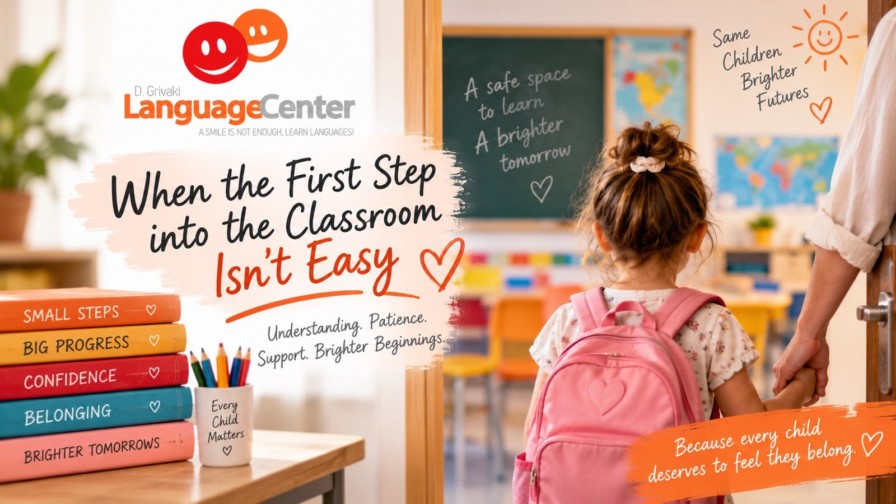
«Όταν το πρώτο βήμα στην τάξη δεν είναι εύκολο»
Κάθε Σεπτέμβρης φέρνει μαζί του καινούργια ξεκινήματα. Νέα τάξη, νέοι συμμαθητές, νέοι εκπαιδευτικοί, νέες προσδοκίες.
Για τα περισσότερα παιδιά, η επιστροφή στην τάξη είναι μια διαδικασία που σύντομα γίνεται γνώριμη. Υπάρχουν όμως και παιδιά που χρειάζονται περισσότερο χρόνο. Παιδιά που στέκονται στην πόρτα και διστάζουν. Που κρατούν το χέρι του γονέα πιο σφιχτά. Που κλαίνε, αρνούνται να μπουν ή ζητούν να επιστρέψουν στο σπίτι.
Και κάποιες φορές αυτό δεν συμβαίνει μόνο την πρώτη χρονιά. Επαναλαμβάνεται κάθε Σεπτέμβρη.
Πίσω από το «δεν θέλω» μπορεί να κρύβεται ένα «δυσκολεύομαι»
Όταν ένα παιδί αρνείται να μπει στην τάξη, είναι εύκολο να θεωρήσουμε ότι κάνει πείσμα, ότι είναι κακομαθημένο ή ότι απλώς «δοκιμάζει τα όριά μας».
Στην πραγματικότητα, η συμπεριφορά του μπορεί να είναι ο τρόπος του να μας πει κάτι που ακόμη δεν ξέρει να εκφράσει με λόγια:
«Δεν νιώθω ακόμη ασφαλής.»
«Φοβάμαι ότι δεν θα τα καταφέρω.»
«Δεν ξέρω πώς να πλησιάσω τα άλλα παιδιά.»
«Χρειάζομαι λίγο περισσότερο χρόνο.»
«Θέλω να ξέρω ότι κάποιος εδώ με βλέπει και με καταλαβαίνει.»
Κάθε παιδί έχει διαφορετικό ρυθμό προσαρμογής. Για ορισμένα παιδιά, η ένταξη σε μια ομάδα είναι σχεδόν αυθόρμητη. Για άλλα, αποτελεί μια πραγματική συναισθηματική πρόκληση.
Γιατί ένα παιδί μπορεί να δυσκολεύεται κάθε χρόνο;
Η αλλαγή της ομάδας, ένας καινούργιος εκπαιδευτικός, διαφορετικές απαιτήσεις, η επιστροφή μετά τις καλοκαιρινές διακοπές ή ακόμη και η αίσθηση ότι «οι άλλοι γνωρίζονται καλύτερα μεταξύ τους» μπορούν να δημιουργήσουν ανασφάλεια.
Ένα παιδί μπορεί επίσης να είναι περισσότερο εσωστρεφές ή ευαίσθητο στις αλλαγές και στα νέα περιβάλλοντα. Σε ορισμένες περιπτώσεις μπορεί να έχει βιώσει προηγούμενες δυσάρεστες κοινωνικές εμπειρίες ή να χρειάζεται περισσότερη υποστήριξη στην κοινωνική αλληλεπίδραση.
Αυτό που χρειάζεται δεν είναι μια ταμπέλα. Χρειάζεται παρατήρηση, υπομονή και συνεργασία.
Τι δεν βοηθά
Φράσεις όπως «είσαι μεγάλος πια», «όλα τα άλλα παιδιά μπαίνουν κανονικά», «δεν υπάρχει λόγος να κλαις» ή «σταμάτα τώρα και μπες μέσα» μπορεί να ειπωθούν με καλή πρόθεση, όμως συχνά κάνουν το παιδί να αισθάνεται ότι το συναίσθημά του είναι λάθος.
Και κυρίως, δεν χρειάζεται σύγκριση.
Το παιδί που δυσκολεύεται να αποχωριστεί τον γονέα του δεν χρειάζεται να ακούσει πόσο εύκολα τα καταφέρνει ένα άλλο παιδί. Χρειάζεται να αισθανθεί ότι οι μεγάλοι γύρω του έχουν εμπιστοσύνη πως θα τα καταφέρει και εκείνο — στον δικό του χρόνο.
Ο ρόλος του εκπαιδευτικού
Η ένταξη δεν αρχίζει από το βιβλίο. Αρχίζει από τη σχέση.
Ένα ζεστό καλωσόρισμα με το όνομα του παιδιού, μια συγκεκριμένη θέση που το περιμένει, μια μικρή υπευθυνότητα μέσα στην τάξη, ένα παιχνίδι γνωριμίας ή η σύνδεσή του με έναν συμμαθητή μπορούν να λειτουργήσουν ως μικρές «γέφυρες» προς την ομάδα.
Ο εκπαιδευτικός δεν χρειάζεται να απαιτήσει από το παιδί να γίνει αμέσως κοινωνικό. Χρειάζεται να δημιουργήσει τις συνθήκες ώστε το παιδί να θελήσει σταδιακά να συμμετέχει.
Κάποιες φορές το πρώτο μας βήμα δεν είναι «μπες στην τάξη και κάνε μάθημα».
Είναι:
«Έλα να καθίσουμε μαζί για λίγο. Είμαι εδώ. Όταν είσαι έτοιμος, θα προχωρήσουμε μαζί.»
Και ο γονέας;
Ο γονέας χρειάζεται να δείχνει κατανόηση, αλλά ταυτόχρονα σταθερότητα. Να αναγνωρίζει το συναίσθημα χωρίς να ενισχύει τον φόβο.
Μπορεί να πει:
«Καταλαβαίνω ότι σήμερα σου φαίνεται δύσκολο. Η δασκάλα σου είναι εδώ και θα σε βοηθήσει. Θα μπεις, θα κάνεις το μάθημά σου και μετά θα έρθω να σε πάρω.»
Ένα σύντομο, σταθερό και ήρεμο τελετουργικό αποχωρισμού είναι συνήθως πιο βοηθητικό από έναν παρατεταμένο αποχαιρετισμό γεμάτο διαπραγματεύσεις.
Το σημαντικότερο είναι γονέας και εκπαιδευτικός να μεταδίδουν το ίδιο μήνυμα: «Σε καταλαβαίνουμε, σε στηρίζουμε και πιστεύουμε ότι μπορείς.»
Όταν η δυσκολία επιμένει
Δεν χρειάζεται κάθε δυσκολία προσαρμογής να μας ανησυχήσει. Αν όμως η έντονη άρνηση επιμένει, επαναλαμβάνεται για μεγάλο διάστημα ή συνοδεύεται από έντονο άγχος και επηρεάζει σημαντικά την καθημερινότητα του παιδιού, τότε χρειάζεται στενότερη συνεργασία οικογένειας και σχολείου και, όπου κρίνεται απαραίτητο, η συμβουλή ενός κατάλληλου ειδικού.
Γιατί ο στόχος δεν είναι απλώς να καταφέρουμε το παιδί να περάσει την πόρτα της τάξης.
Ο πραγματικός στόχος είναι, όταν περάσει αυτή την πόρτα, να αισθανθεί ότι ανήκει εκεί.
Κάθε παιδί χρειάζεται τον δικό του χρόνο
Στο D. Grivaki Language Center, πιστεύουμε ότι πριν ζητήσουμε από ένα παιδί να μάθει, χρειάζεται να το βοηθήσουμε να αισθανθεί ασφαλές.
Να γνωρίζει ότι υπάρχει χώρος για τον χαρακτήρα του, τον ρυθμό του, τις δυσκολίες αλλά και τις δυνατότητές του.
Γιατί πίσω από ένα παιδί που σήμερα στέκεται διστακτικά στην πόρτα μπορεί να βρίσκεται ο αυριανός μαθητής που θα μπει στην τάξη χαμογελώντας.
Αρκεί κάποιος να μην το πιέσει απλώς να μπει.
Να το βοηθήσει να νιώσει ότι θέλει να μείνει.
Δέσποινα Γριβάκη
Director of Studies & Owner
D. Grivaki Language Center
“When the First Step into the Classroom Isn’t Easy“
Every September brings a new beginning. A new classroom, new classmates, new teachers, new expectations.
For most children, returning to the classroom is a transition that soon becomes familiar. But there are also children who need more time. Children who stand at the door and hesitate. Who hold their parent’s hand a little tighter. Who cry, refuse to go in, or ask to go back home.
And sometimes, this does not happen only during their first year.
It happens every September.
Behind “I don’t want to” there may be an “I’m finding this difficult”
When a child refuses to enter the classroom, it can be easy to assume that they are being stubborn, spoiled, or simply “testing the boundaries.”
In reality, their behaviour may be their way of telling us something they do not yet know how to express in words:
“I don’t feel safe yet.”
“I’m afraid I won’t be able to do it.”
“I don’t know how to approach the other children.”
“I need a little more time.”
“I need to know that someone here sees me and understands me.”
Every child has a different pace of adjustment. For some children, becoming part of a group happens almost naturally. For others, it can be a genuine emotional challenge.
Why might a child struggle every year?
A change of group, a new teacher, different expectations, returning after the summer holidays, or even the feeling that “the other children already know each other better” can create insecurity.
A child may also be more introverted or particularly sensitive to change and unfamiliar environments. In some cases, they may have had difficult social experiences in the past or may simply need more support when interacting with others.
What that child needs is not a label.
They need observation, patience and cooperation.
What does not help
Phrases such as “You’re a big boy/girl now,” “All the other children are going in without a problem,” “There’s no reason to cry,” or “Stop crying and go inside” may be said with the best of intentions, but they can make a child feel that their emotions are somehow wrong.
Above all, comparison does not help.
A child who is finding it difficult to separate from a parent does not need to hear how easily another child is managing.
They need to feel that the adults around them genuinely believe that they will manage too — in their own time.
The role of the teacher
A child’s integration into the classroom does not begin with a textbook.
It begins with a relationship.
A warm welcome using the child’s name, a specific seat waiting for them, a small responsibility in the classroom, a getting-to-know-you game, or pairing them with a supportive classmate can all become small but important “bridges” into the group.
The teacher does not need to demand that the child immediately become sociable or fully involved.
The teacher needs to create the right conditions so that the child gradually wants to participate.
Sometimes our first step should not be:
“Go into the classroom and start your lesson.”
Sometimes it should simply be:
“Come and sit with me for a little while. I’m here. When you’re ready, we’ll take the next step together.”
And what about the parent?
Parents need to show understanding while remaining calm and consistent. They can acknowledge their child’s feelings without unintentionally reinforcing the fear.
A parent might say:
“I understand that this feels difficult today. Your teacher is here and will help you. You’re going to go in, have your lesson, and I’ll be here to pick you up afterwards.”
A short, calm and consistent goodbye routine is usually more helpful than a long farewell filled with repeated negotiations.
Most importantly, parents and teachers should communicate the same message:
“We understand you. We are here to support you. And we believe you can do this.”
When the difficulty persists
Not every difficulty with adjustment should cause concern. However, if a child’s strong refusal persists, continues for a long period of time, is accompanied by significant anxiety, or begins to interfere considerably with everyday life, closer cooperation between the family and the school may be needed and, where appropriate, guidance from a qualified professional may also be helpful.
Because the goal is not simply to persuade a child to walk through the classroom door.
The real goal is that, once they walk through that door, they feel that they belong there.
Every child needs their own time
At D. Grivaki Language Center, we believe that before asking a child to learn, we first need to help them feel safe.
They need to know that there is space for their personality, their own pace, their difficulties and, above all, their potential.
Because behind the child who stands hesitantly at the classroom door today may be tomorrow’s student who walks through that same door with a smile.
As long as someone does not simply push them to go inside.
But helps them feel that they want to stay.
Despoina Grivaki
Director of Studies & Owner
D. Grivaki Language Center